


29 Jun Peregrine falcon nest and wildfires!
As a Science Communication Intern at Rocky Mountain National Park (RMNP), part of my work is to use digital media to share with the public the research and conservation work going on at the park. Therefore, I have been taking many photos and videos of different projects. This week, I was fortunate to go out in the field with two different working groups. On Wednesday, I went on a hike with the raptor monitoring science technician to a location in the park called Cub Lake. It was about a 2 mile hike to get to the lake, and once I saw it, I was in awe!
Cub Lake at Rocky Mountain National Park
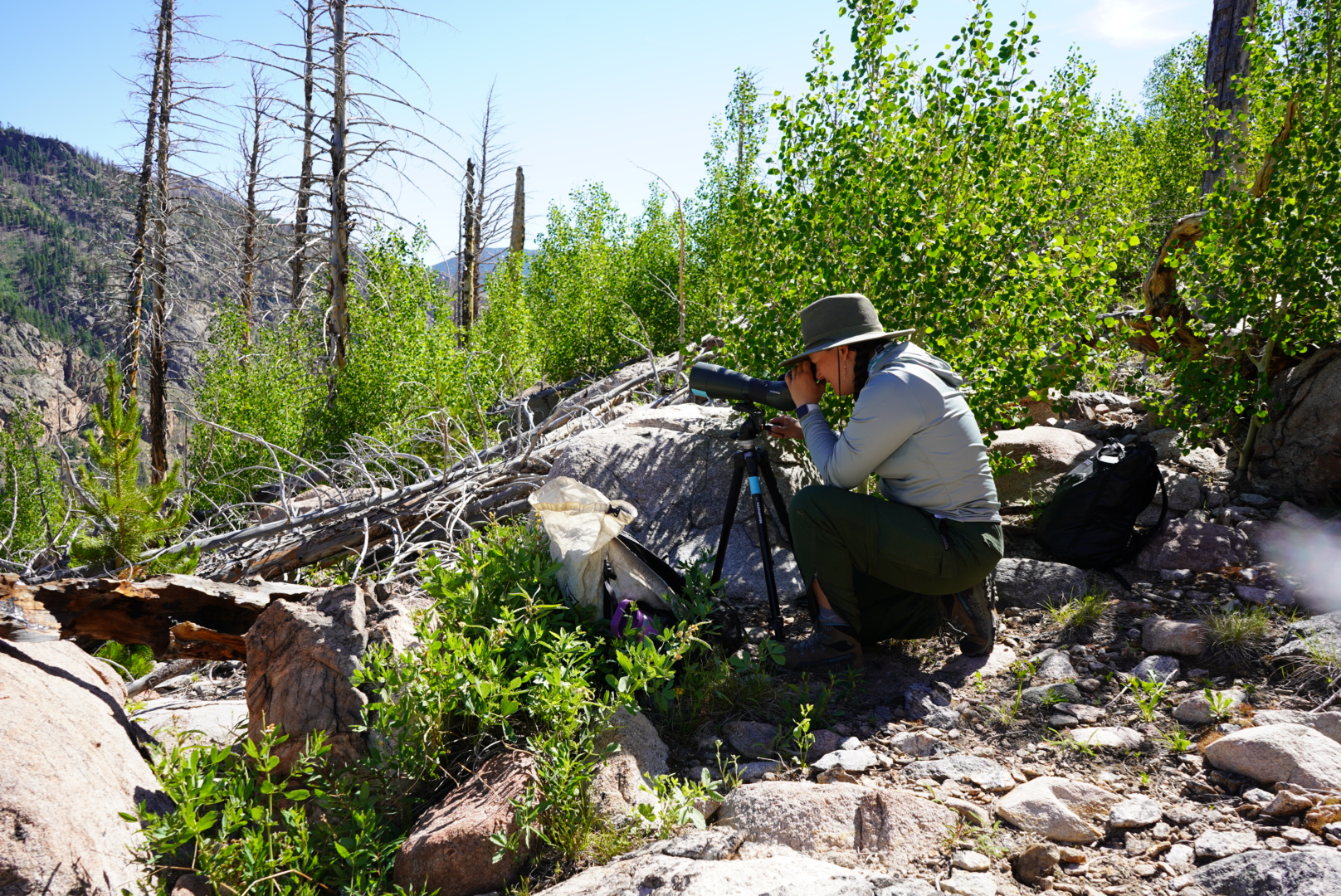
It was also interesting to see this area because it was impacted by the 2020 wildfires (East Troublesome and Cameron Peak fires) and I could see many of the trees here had been burned. We continued with our hike and got to a spot on the mountain where we could spot a Peregrine falcon nest! We used a scope to see the nest on the opposite side of us across a valley, and we spotted 3 chicks! From the white feathers with a couple brown spots, we could approximate that they were about 3-4 weeks old. One of the parents flew in for a few minutes and then left again. This was a super neat experience that I may potentially get to share online on the Research Learning Center’s webpage!
Raptor monitoring tech looking through scope to see peregrine nest.
I mentioned the 2020 wildfires above, which brings me to my bigger project of my internship. As a Science Communication intern, I also get to read the different research proposals that many university researchers send to the Research Learning Center for permit approvals. Therefore, I am reading many of the post-fire research that has recently been worked on to study the impacts of the fires that ran across 30,000 acres of RMNP.
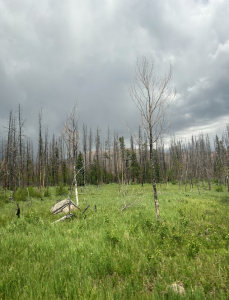
Burned trees from the 2020 East Troublesome Fire in the West side of RMNP.
I am creating different research briefs about the different types of research, which are basically engaging summaries to read about the research and can then be more easily shared with the public and staff. I will then create a Resource Brief, which will be a longer article, containing information about the different fire research but also background, fire impacts, climate change and park management strategies. This will provide different audiences with knowledge about wildfires in general and how it pertains to RMNP. It will also include photos, which help with the narrative and can be very impactful. I hope that with this project and my work during this internship, I’ll be able to help the Research Learning Center in engaging audiences about research at the park!
No Comments