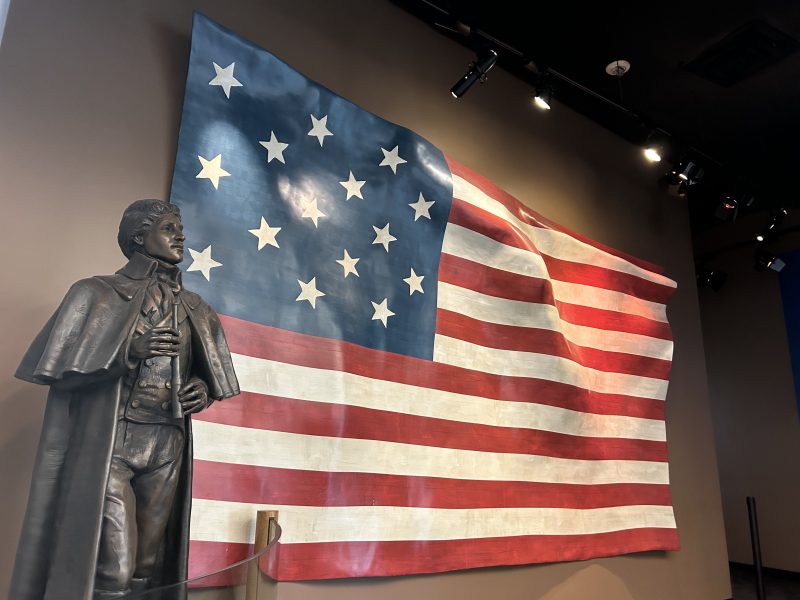
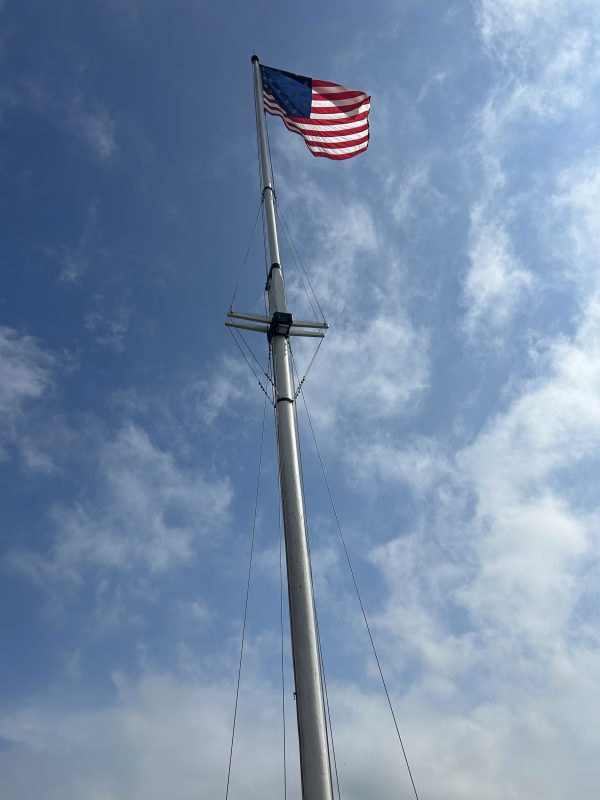
At Fort McHenry National Monument and Historic Shrine, I learned about the patriotism behind the United States national anthem. A poem created during the Battle of 1814 by Francis Scott Key who witnessed the flag still waving at Fort McHenry. Inspired by the war of 1812, Key wrote the Star-Spangled Banner which transformed into a national identity for Americans all around the United States. Today, the fort is a national park service site that still commemorates the United States flag by changing it in the morning and in the evening.
Participating in the flag change program I learned about the significance in creating a routine for soldiers. Before Fort McHenry became a national site, the fort was used as defense territory for Baltimore soldiers, troops, and civilians that were afraid of the British attack that was on the way. Similar to the time period of 1814, the national park service unfolds the flag with the help of visitors, changing it for another flag and fold the previous flag into a triangle. This routine is significant because it could not be done alone. There always needs to be another person which reflects a sense of patriotism within Baltimore itself.
After the war of 1812, Fort McHenry served as an active military base where soldiers were trained. The fort later became a temporary prison for pro-confederate soldiers during the civil war. Before it became a national site, the fort was used as a hospital for the veterans during World War I.
Overall, this site contains different eras of military, war, and medical health. Throughout my first few weeks at Fort McHenry it has been impactful to see people come together to unfold, change, and bring down the Star-Spangled Banner flag, and fold it into a triangle as a team no matter where they traveled from.


No Comments